
From Searing to Steaming Every Way to Cook Your Food
Why Every Home Cook Needs to Know the Cooking Methods List
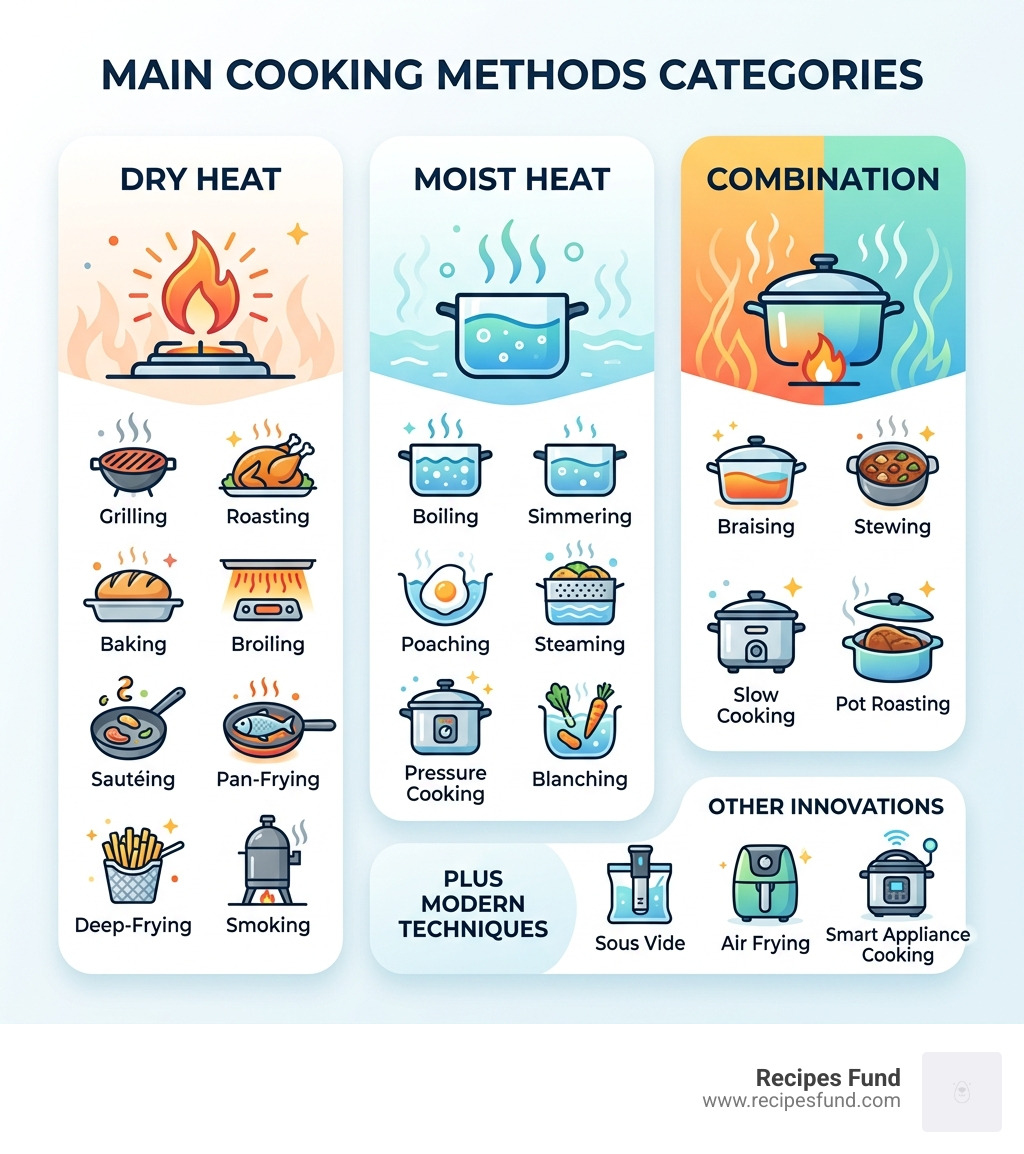
The cooking methods list every home cook should know breaks down into three main categories:
| Category | Methods |
|---|---|
| Dry Heat | Grilling, roasting, baking, broiling, sautéing, pan-frying, deep-frying, smoking |
| Moist Heat | Boiling, simmering, poaching, steaming, pressure cooking, blanching |
| Combination | Braising, stewing, slow cooking, pot roasting |
Plus a growing group of modern techniques — sous vide, air frying, and smart appliance cooking — that are becoming kitchen staples in 2026.
Think about the last time a dish didn’t turn out right. Maybe the chicken was dry, the vegetables were mushy, or the steak lacked that satisfying crust. More often than not, the culprit isn’t the recipe — it’s the cooking method.
The way you apply heat to food changes everything: texture, flavor, color, and even nutrition. A piece of salmon poached gently in broth tastes completely different from one seared in a hot cast-iron pan — and both are right, depending on what you want.
Culinary schools typically teach 12 to 13 core cooking methods, grouped by how heat reaches the food. Once you understand those groups, choosing the right technique for any ingredient becomes much more intuitive.
This guide walks through all of them — from the oldest methods humans have used to the newest appliance-driven techniques shaping home kitchens today.
The Three Pillars of the Cooking Methods List
When we talk about culinary theory, we start with the physics of heat transfer. How does the warmth from your stove actually get into that piece of broccoli? In the culinary world, we categorize our cooking methods list based on the medium used to transfer that heat: air, fat, water, or steam.
There are three primary ways heat moves:
- Conduction: This is direct contact. Think of a steak touching a hot cast-iron skillet. The heat moves directly from the metal into the meat.
- Convection: This involves the movement of molecules in a fluid (liquid or gas). In a convection oven, fans circulate hot air; in a pot of boiling water, the water moves in currents.
- Radiation: This is heat moving through waves. Grilling over hot coals or using a microwave are classic examples of radiant heat.
Understanding these pillars helps us control our results. As noted in Cooking Methods: A Comprehensive Overview of the Three Ways to Cook Food – HomeDiningKitchen, we choose our method based on the ingredient’s texture and our desired flavor profile. For instance, dry heat is fantastic for developing deep, savory flavors through browning, while moist heat is the king of tenderizing tough fibers.
At Recipes Fund, we believe that mastering these basics is the “secret sauce” to kitchen confidence. Instead of just following a recipe blindly, you’ll start to look at a cut of meat and think, “This is tough, so I should use a moist heat method to break down the collagen.”
Dry Heat Techniques for Flavor and Texture
Dry heat cooking refers to any technique where heat is transferred to the food without the use of water. This includes cooking with hot air, metal, or even fat. Wait—fat? Yes! Even though oil is a liquid, it contains no water, so frying is technically a dry heat method.

The superstar of dry heat is the Maillard reaction. This chemical reaction happens when proteins and sugars in food are exposed to temperatures of 300°F or higher. It’s what creates the brown crust on a steak, the golden hue of a loaf of bread, and the complex, nutty flavors we crave.
Common dry heat methods include:
- Grilling: Cooking over an open flame or heat source. It’s fast and adds a smoky char.
- Broiling: Essentially upside-down grilling. The heat comes from above, perfect for melting cheese or browning the top of a casserole.
- Sautéing: From the French word sauter (to jump), this involves cooking small pieces of food in a hot pan with a little bit of fat.
- Deep-Frying: Submerging food in hot oil. For the perfect crunch, we recommend keeping your oil between 325°F and 375°F.
According to the Cooking Methods: A Comprehensive Guide to 15 Essential Techniques – AffordableMealPrep, dry heat is best for tender cuts of meat and vegetables that you want to remain crisp.
Roasting vs. Baking in Your Cooking Methods List
These two are often confused because they both happen in the oven. However, there are key differences in temperature and intent:
- Roasting: Usually involves higher temperatures (400°F and above). The goal is to brown the surface and create a crust. We roast whole chickens, turkeys, and root vegetables.
- Baking: Generally uses lower temperatures (300°F to 400°F). It’s used for foods that lack structure initially (like cake batter or bread dough) or for delicate items like fish that need even, gentle heat.
Sautéing and Stir-Frying Essentials
Sautéing and stir-frying are cousins. Both require high heat and constant motion to prevent sticking and ensure even cooking.
- The Golden Rule: Never overcrowd the pan. If you put too much food in at once, the temperature drops, the food releases moisture, and you end up steaming your dinner instead of searing it.
- Wok Cooking: In stir-frying, we often use a wok, which has high, sloping sides that allow us to toss the food quickly, locking in flavors and maintaining a “crisp-tender” texture.
Moist Heat Methods for Tenderness and Nutrition
Moist heat cooking uses water, liquid, or steam to transfer heat. This is the go-to category for rehydrating dried foods (like beans and pasta) and softening tough fibers in meats and vegetables.
One of the biggest perks of moist heat is that it doesn’t require added fats, making it a very healthy way to cook. It’s also excellent for preserving the natural flavors of delicate foods.
Key moist heat methods from the List of cooking techniques include:
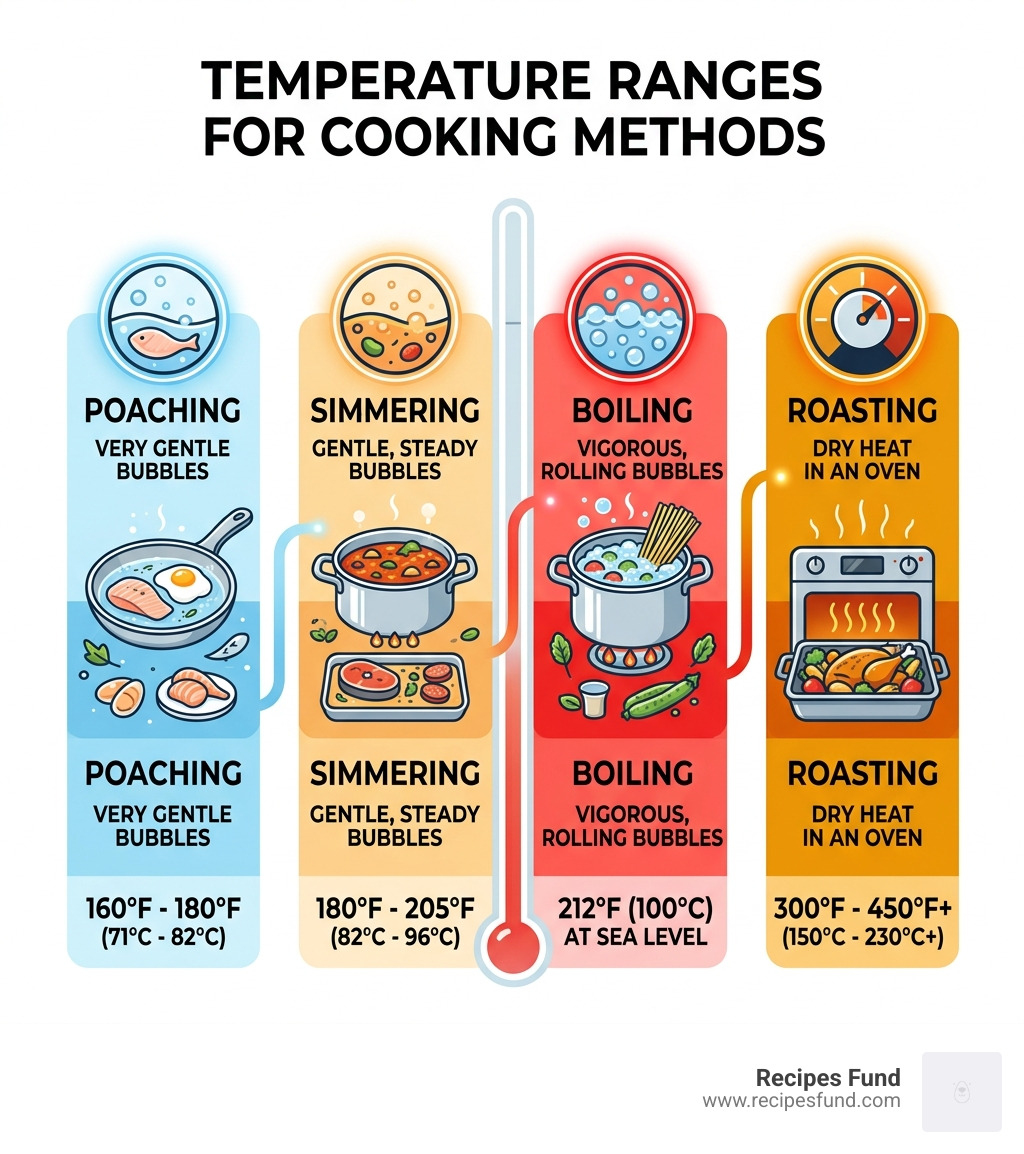
- Boiling: Cooking at 212°F with large, vigorous bubbles. Best for pasta and potatoes.
- Simmering: Cooking just below the boiling point (180°F-205°F). You should see small, gentle bubbles. This is the “sweet spot” for soups and stews.
- Pressure Cooking: Using a sealed environment to trap steam, which increases the pressure and raises the boiling point of water. In 2026, smart pressure cookers can cut cooking times by up to 70% while keeping nutrients locked in.
Poaching and Steaming: Healthy Entries on the Cooking Methods List
If you want to keep things light, these are your best friends:
- Poaching: This is the gentlest method, with temperatures between 140°F and 180°F. There should be almost no visible bubbles. We use this for delicate proteins like eggs and fish to ensure they don’t break apart.
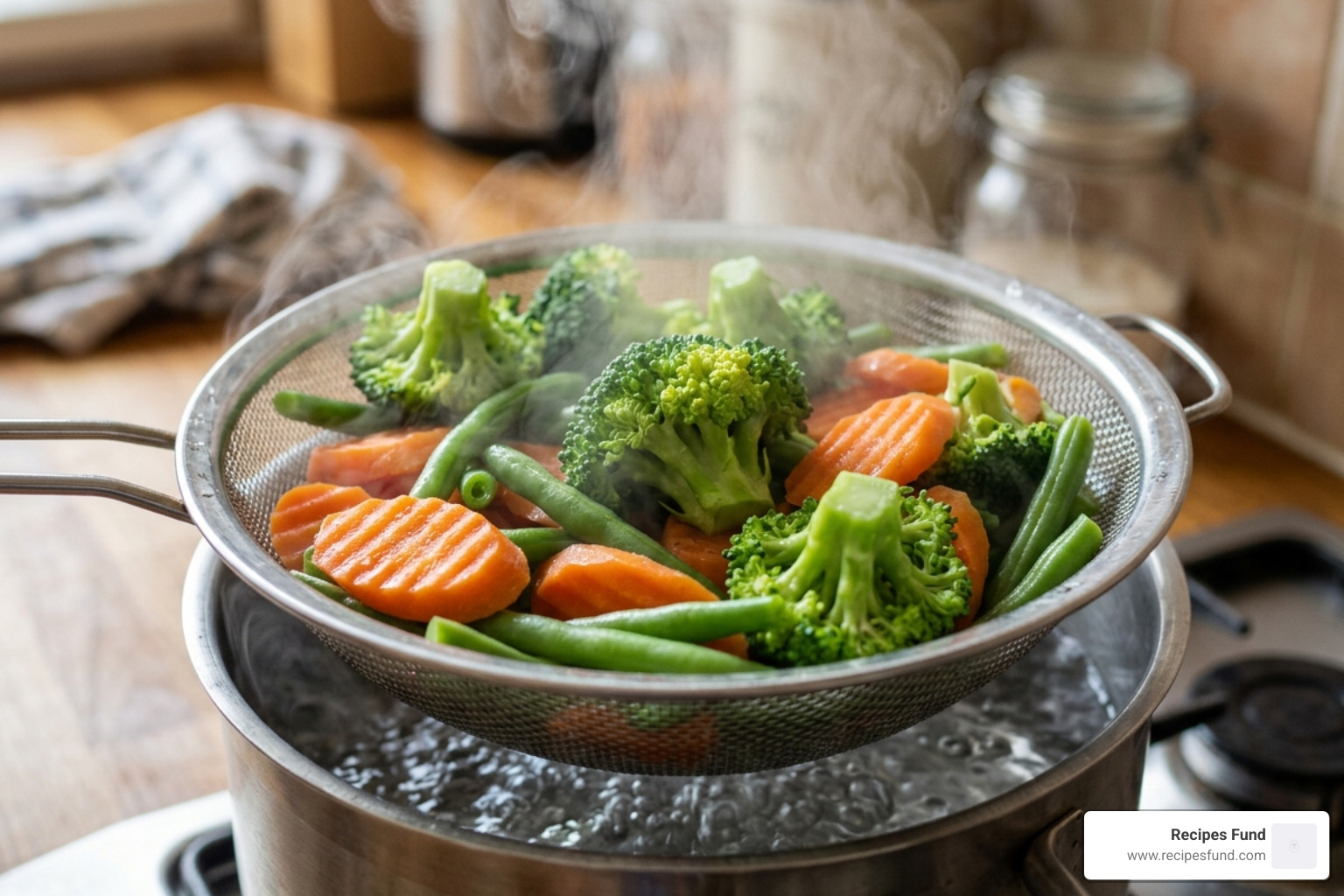
- Steaming: Food is suspended above boiling water. Because the food never touches the water, it doesn’t lose its water-soluble vitamins. It’s the ultimate method for vibrant, crunchy vegetables.
Blanching and Shocking Techniques
Blanching is a two-step process that every meal-prepper should master:
- The Boil: Submerge vegetables in boiling water for a very short time (seconds to a few minutes).
- The Shock: Immediately plunge the food into an ice bath.
This “shocks” the food, stopping the cooking process instantly. It deactivates enzymes that cause spoilage, locks in a bright green color, and makes it much easier to peel things like tomatoes or peaches.
Mastering Combination and Modern Specialized Techniques
Sometimes, one method isn’t enough. Combination cooking uses both dry and moist heat to achieve the best of both worlds: a flavorful, browned exterior and a melt-in-your-mouth interior.
- Braising: We start by searing a large piece of meat in a hot pan (dry heat) to develop flavor. Then, we add a small amount of liquid, cover the pot, and cook it slowly (moist heat).
- Stewing: Similar to braising, but the meat is cut into smaller bite-sized pieces and is completely submerged in liquid.
Braising vs. Stewing: A Quick Comparison
| Feature | Braising | Stewing |
|---|---|---|
| Food Size | Large cuts (pot roast, shanks) | Small, uniform pieces |
| Liquid Amount | Partially covered (bottom 1/3) | Fully submerged |
| Final Result | Meat served with a reduction | Meat served in the cooking liquid |
In the modern 2026 kitchen, we also have specialized tools that have changed the game:
- Sous Vide: Food is vacuum-sealed and cooked in a water bath at a precise temperature. It’s impossible to overcook a steak this way!
- Air Frying: This is actually high-powered convection. It uses hot air to mimic the results of deep-frying with 90% less oil.
- Smoking: Cooking food at low temperatures (225°F-300°F) in the presence of smoke from wood chips. It’s a slow process that adds incredible depth of flavor.
- AI-Assisted Smart Cooking: Many of today’s appliances use sensors to detect the internal temperature and moisture levels of food, automatically switching from a sear to a simmer to ensure a perfect result every time.
Frequently Asked Questions about Culinary Techniques
What is the difference between boiling and simmering?
It all comes down to the bubbles! Boiling happens at 212°F (at sea level) and is characterized by “rolling” bubbles that don’t stop when you stir the pot. Simmering is gentler, usually between 180°F and 205°F, with small “lazy” bubbles that break the surface occasionally. Simmering is better for most foods because the violent movement of boiling can break delicate ingredients apart.
Why is oil-based frying considered a dry heat method?
This is one of the most common questions in our culinary games! Even though oil is a liquid, it is 100% fat and contains no water. Because it doesn’t use moisture to cook the food, and because it can reach temperatures far above the boiling point of water (allowing for the Maillard reaction), it is classified as dry heat.
Which cooking method is the fastest for busy home cooks?
If you’re in a rush, pressure cooking and microwaving are the champions. Pressure cooking uses high-pressure steam to cook foods up to 70% faster than traditional methods. For small portions or reheating, the microwave uses radiation to vibrate water molecules inside the food, generating heat almost instantly.
Conclusion
Mastering the cooking methods list is like learning the scales before you play a masterpiece. Once you understand how heat interacts with different ingredients, the kitchen becomes a place of creativity rather than stress. Whether you are searing a steak for that perfect crust or gently steaming vegetables to keep them vibrant, you are using science to create art.
At Recipes Fund, we are dedicated to making this journey fun and interactive. We believe that cooking is a skill that grows with practice, and our mission is to provide you with the tips, techniques, and exercises you need to become a culinary force in your own home.
Ready to put your new knowledge to the test? Explore our interactive tools and More info about recipes services to find your next favorite technique. Happy cooking!
